Don’t Fail Your Water Pump

Complete Car Care • November 9, 2016

Share this article

Don’t Fail Your Water Pump

Hello 93636,
I chose today’s topic due to the rash of failed water pumps I replaced this month. These water pump failures were predictable and preventable because the primary cause was low coolant levels.

At my shop, whenever an engine oil change is performed we also perform a large vehicle preventative maintenance inspection. That includes cooling system testing. If the vehicle’s coolant level is low, it indicates a leak. Some customers choose not to repair cooling systems leaks as long as the engine is not overheating. Instead, they choose to top off the cooling system from time to time. In my professional opinion, that’s a bad decision. Sooner or later the leak will need to be repaired. Many times it’s later, when the water pump fails. That’s what happened with the three water pumps I have replaced so far this month.

The vehicle that prompted this article is a 1993 Mitsubishi pick up. The upper radiator tank has been cracked and leaking for some time but the customer adopted the top off from time to time strategy. Yesterday when I saw the Mitsubishi on the flat bed of the tow truck I knew it probably wasn’t good. When the water pump failed, it also took out the belt. Hope he caught it before the engine overheated and damaged the cylinder head gasket. We will see tomorrow. Cooling system leaks can lead to catastrophic engine failures. The proper time to repair a cooling system leak is before. Now, instead of just a radiator repair, I need to replace the water pump and belt. Oh, almost forgot, the water pump on this vehicle is under the timing cover which means the timing belt is likely in the way. WOW. I see a longawaited vacation in my near future.

Here’s my explanation of how water pump failure is caused from LOW (not empty) coolant levels. The water pump impeller moves coolant through the engine block, cylinder head and back into the radiator where the heat is dissipated. The impeller draws fresh, cool coolant from the radiator into the water pump, compresses it and pushes it out the other side into the engine block. When the water pump impeller is not submerged, it mixes air bubbles into the coolant resulting in foaming and cavitation. Waves in the ocean kind of do the same thing as the wave curls over and traps air into the ocean water creating the white foam. The illustration I like to use with my customers to explain cavitation is imagine a large ship riding high in the water with its propeller partially submerged. As the propeller blade rotates it smashes into the water pulverizing and aerating it. The consequence of this action is cavitation. When cavitation happens, a heavy vibration occurs when the air bubbles burst and then again when the blade slaps the water. Same thing happens when the water pump impeller vanes are partially submerged. The vibrations on the impeller are transferred through the impeller shaft, destroying the water pump bearing. Once the bearing fails the pump shaft no longer spins true and the shaft seal begins to leak. Also, worn out coolant also allows bubbles to form on cast aluminum housings and create pits, or cavities, when they explode.

I recommend pulling the owner’s manual from the vehicle’s glove box and read the manufacturer’s recommended service intervals. Engine coolant does wear out. Exchanging coolant at the recommended interval does reduce premature failures of the cooling system. Just a footnote here: If you haven’t noticed, the lower radiator hose is larger than the upper radiator hose because it’s on the suction side (negative pressure) of the water pump and suction is less efficient. The upper radiator hose is smaller in diameter because it’s on the discharge or positive pressure side of the water pump. Whenever a radiator hose blows apart, it’s the upper hose because it’s the one with positive pressure.

For suggestions on future topics or questions concerning a vehicle, I can be contacted at completecarcare@hotmail.com or Facebook me at Complete Car Care.

Hope this helps. Happy Thanks giving all. God Bless America and God Bless 93636.

Warren Parr
Twice NAPA/ASC California Technician
of the Year
2013 NAPA/ASC National Technician
of the Year, Second Runner Up.

Recent Posts

By Complete Car Care • October 22, 2024
Codes P0171 (Lean Bank 1) & P0175 (Lean Bank 2) are probably the two most common emissions codes we deal with on a daily basis. The fundamental failure is that the Oxygen Sensor...
By Complete Car Care • October 22, 2024
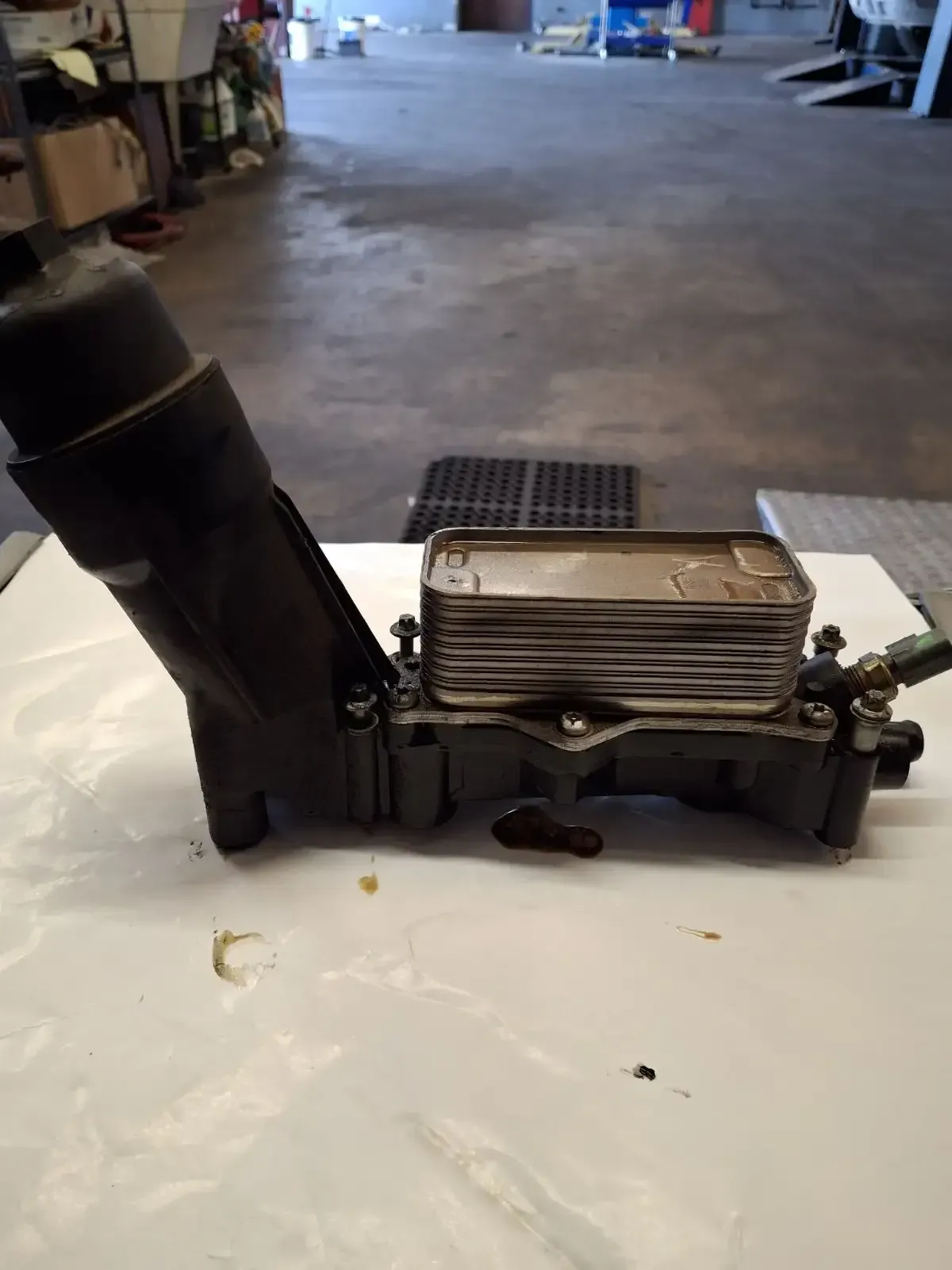
Hello to all my Complete Car Care Friends & soon to be Friends. Here we have a Jeep for which my customer was complaining of a transmission fluid leak. The engine is a 3.6L V6...
October 1, 2024
Hello All. Thank you for considering Complete Car Care for your automotive diagnostic needs. Since 2019, the first Saturday of each month, a group of local NAPA AutoCare Service...
By Complete Car Care • September 26, 2024
Fresno Unified School Dist. is the 3rd largest school district in California. When you add all the other School Districts, this event at Chukchansi Park is one of the largest high...
By Complete Car Care • December 9, 2016
The Injection Section
By Complete Car Care • October 9, 2016
Don’t Anti-Seize the Day
By Complete Car Care • September 9, 2016
Electric Everything
By Complete Car Care • August 9, 2016
The HC Detective
By Complete Car Care • July 9, 2016
How to Keep Cool
By Complete Car Care • June 9, 2016
To D.I.Y. or Not to D.I.Y
Show More