
Understanding Your Check Engine Light

Complete Car Care • August 9, 2015

Share this article

Hello 93636.
The other day I asked my wife her opinion as to what I should address in this month’s column. She said she doesn’t understand what all the lights and symbols on the vehicle’s dash mean. An explanation of those would be helpful. The most common complaint and confusing item we deal with on a daily basis is the “Check Engine” light. Let me give you a basic understanding of the “Check Engine” light.

Let’s say you are driving along and your “Check Engine” light comes on. What does it mean and what should you do? The “Check Engine” light is an EMISSION FAILURE warning light. It is NOT a low oil, low oil pressure, low coolant and/or engine overheating warning light, although it is possible for a trouble code to set for those conditions. Failure for one of those problems will turn on a RED warning light. The RED warning light means IMMEDIATELY turn the engine off and call for a tow truck. If the vehicle continues to be driven with a RED warning light on, likely eminent and severe damage will occur.

Different Colors
The AMBER “Check Engine” light is cautionary. It basically means the vehicle has an emissions failure. A vehicle with a “Check Engine” light on will automatically fail an emissions test. Just a note: before each drive it is advised prior to starting the engine that you turn the ignition key to the “ON” position and observe that all warning lights are operational. In the event of a failure, your vehicle can warn you by turning on a “Warning Light.” Take note of all non-functioning warning lights and drive at your own risk. Don’t hesitate to read your vehicle’s owner’s manual for specific information.

If the “Check Engine” light turns on solid and the vehicle seems normal in every other way, you do not have to call for a tow truck at this time. Continue to drive the vehicle cautiously paying attention to any changes in vehicle performance. As soon as possible get the vehicle to a technician and have the “Check Engine” light diagnosed. Continuing to drive the vehicle without having it repaired can cause a domino effect and other component failures could result. At minimum your fuel mileage may be reduced. Remember, vehicle emissions are unburned and/or partially burned fuel.

Burning Dollars
If the “Check Engine” light is flashing, STOP and turn the engine OFF IMMEDIATELY!!! If the light is flashing, it means your vehicle is omitting more than 1 1/2 times the allowable tail pipe emissions and catalytic converter damage is happening. It takes as little as 15 seconds to destroy a catalytic converter. If you continue to drive with a flashing “Check Engine” light, it’s costing you between hundreds to one thousand dollars per mile. Stop the vehicle, turn the engine OFF and call for a tow truck. It’s much cheaper to be towed than to replace catalytic converters.

Also, when the “Check Engine” light is turned on, some other very important things happen. The PCM (computer) sets a diagnostic trouble code and records the vehicle’s “Freeze Frame Data.” The Freeze Frame Data is a snapshot of the vehicle’s driving conditions when the failure occurred. It’s like a flight recorder. It tells the technician engine RPM, vehicle speed, engine load, engine coolant temperature and much more valuable diagnostic information. The technician will need this information to form a diagnostic strategy. The Freeze Frame Data allows the technician to duplicate the driving conditions in which the failure occurred so testing can be done during a failure. It also allows the technician to drive the vehicle in those conditions to confirm a successfully repair. PLEASE do not let anyone turn off the “Check Engine” light or disconnect the vehicle’s battery prior to the diagnosis. The Freeze Frame Data will be lost. Without the Freeze Frame Data, diagnostics will be much harder and require more time. Erasing trouble codes and Freeze Frame Data is like flushing money down the drain.

Computer Strategies
In order to compensate for an emissions failure and allow the vehicle to be driven without damage, the PCM may employ any of several strategy options. The PCM can substitute a no-good valve or simply ignore the corrupt value and eliminate it from the engine management algorithms. If eliminated, the PCM will rely more heavily on the remaining properly functioning system values. WARNING: if you are trying to diagnosis a trouble code with a scanner, you better determine if the value you are seeing is a substitute value or actual value. If you guess incorrectly, you’re in for a long, tough day.

The Light’s … Off?
Sometimes the “Check Engine” light will turn off. It turns on and then off a few days later. Let me explain that scenario. The following information is not exact for every vehicle but it’s close enough for our discussion. All cars sold in California since 1996 have to be OBD II (On Board Diagnostic II) compliant. All OBD II compliant vehicles preform onboard self-diagnostic emissions testing. Those tests are called monitors and are part of California emissions testing. Those monitors must complete and PASS or the vehicle will fail its emission test even if the tail pipe emissions are clean. Monitors are separated into two categories: continues and non-continues. Continues monitors are performed on high priority components like some sensors, secondary ignition or fuel injection. They never stop monitoring as long as the engine is running. Non-continues monitors may happen once a drive cycle or once a day. If a continues monitor fails, the “Check Engine” light will come on immediately and will stay on until the condition is corrected. If a non-continues monitor fails, the PCM will store the trouble code in its memory but the “Check Engine” light will not be turned on. If a second failure occurs during one of the next 40 monitors, the “Check Engine” light will be turned on. The PCM will continue testing normally. If that system has three PASS TESTS in a row, the “Check Engine” light will turn off. Two failed tests in 40 turns the “Check Engine” light on and three consecutive pass tests turns the light off. In this case the system is borderline failure. It mostly passes its monitor. It’s been my experience the components responsible for this scenario are most likely the oxygen sensor, catalytic converter and rarely the gas cap.

If the “Check Engine” light is flashing, STOP and turn the engine OFF IMMEDIATELY!!! If the light is flashing, it means your vehicle is omitting more than 1 1/2 times the allowable tail pipe emissions and catalytic converter damage is happening. It takes as little as 15 seconds to destroy a catalytic converter.

Hope this helps. Please don’t hesitate to email me at complete_car_care@hotmail.com with any vehicle questions or suggestions for future articles. I am here to help.

Warren Parr
California Smog License
#EO139887
California Star Station #117312

Recent Posts

By Complete Car Care • October 22, 2024
Codes P0171 (Lean Bank 1) & P0175 (Lean Bank 2) are probably the two most common emissions codes we deal with on a daily basis. The fundamental failure is that the Oxygen Sensor...
By Complete Car Care • October 22, 2024
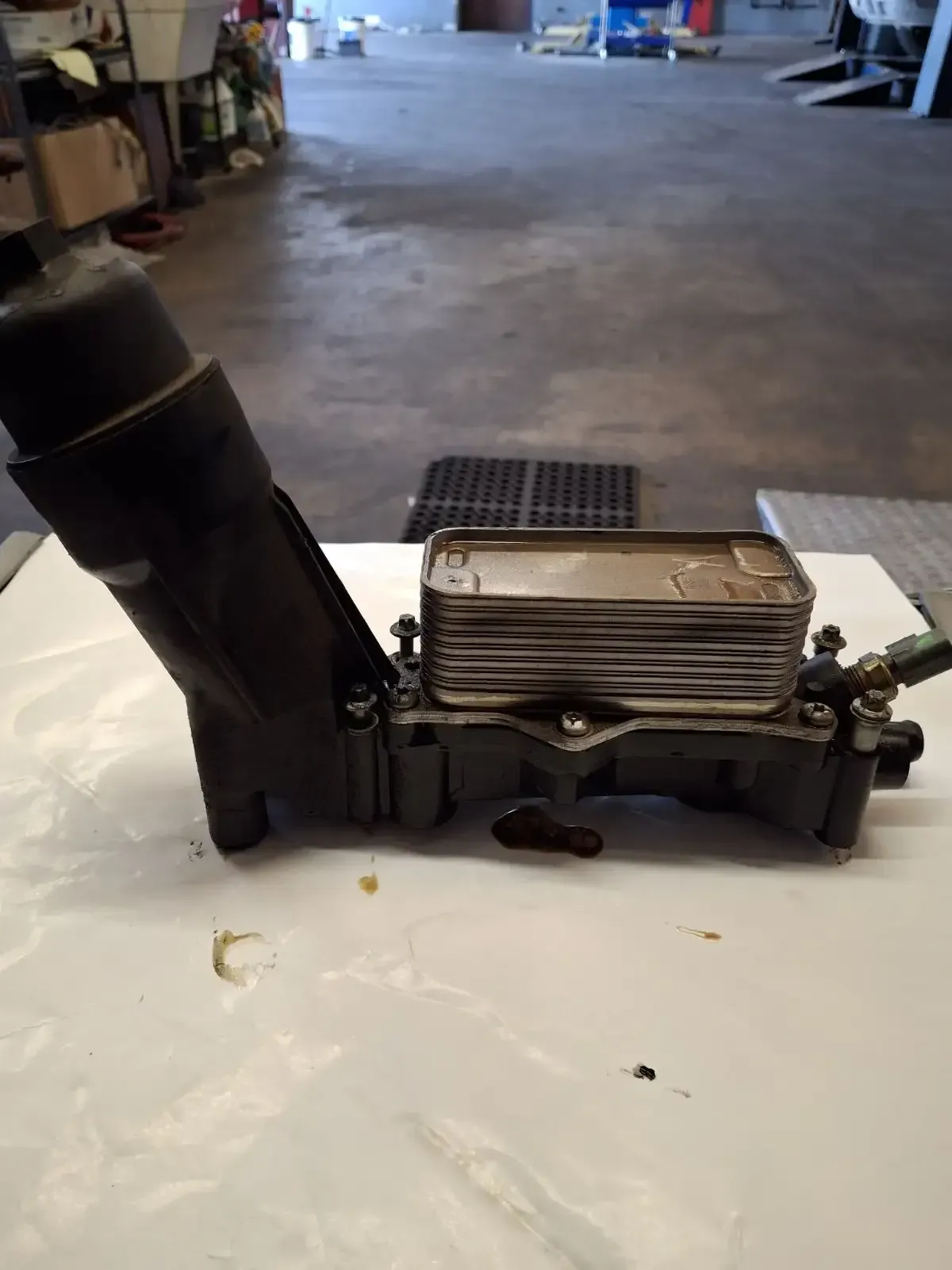
Hello to all my Complete Car Care Friends & soon to be Friends. Here we have a Jeep for which my customer was complaining of a transmission fluid leak. The engine is a 3.6L V6...
October 1, 2024
Hello All. Thank you for considering Complete Car Care for your automotive diagnostic needs. Since 2019, the first Saturday of each month, a group of local NAPA AutoCare Service...
By Complete Car Care • September 26, 2024
Fresno Unified School Dist. is the 3rd largest school district in California. When you add all the other School Districts, this event at Chukchansi Park is one of the largest high...
By Complete Car Care • December 9, 2016
The Injection Section
By Complete Car Care • November 9, 2016
Don’t Fail Your Water Pump
By Complete Car Care • October 9, 2016
Don’t Anti-Seize the Day
By Complete Car Care • September 9, 2016
Electric Everything
By Complete Car Care • August 9, 2016
The HC Detective
By Complete Car Care • July 9, 2016
How to Keep Cool
Show More