Let’s get Gassed

Complete Car Care • October 9, 2015

Share this article

Let’s get Gassed

Hello, 93636.
Last week I was at my regular gas station topping off my fuel tank. I noticed a tanker truck also there dropping off his fuel load. Like always, I walked over to the driver and entered a conversation with him concerning his batch. One of the questions I always ask is, “What is the alcohol content of your batch?” It’s important information I may need when diagnosing customer complaints like, “My fuel mileage and/or engine performance has declined.” Of course one of the first things I will look at is the vehicle’s “fuel trim adaptation.” Is the PCM (Powertrain Control Module/engine computer) adding more fuel than its base program setting? By law, the gasoline we purchase at the pump can contain up to 10 percent alcohol without notification.Anything greater than 10 percent must be posted.As I understand it, gasoline is gasoline. When gasoline is manufactured at the refinery and loaded into delivery trucks, different additive packages can be added to the gasoline to meet the different retailers’requirements. Generally the lower the price of the gasoline the less additives and/or greater the content of alcohol by volume. Alcohol costs less than gasoline and therefore decreases the cost per gallon at the pump.

The driver said there is talk to change to consumer batching at the pump. We would have a choice to add 10 percent or 15 percent alcohol to our batch with 15 percent being the lowest per gallon price. I gave him my suggestion which is a third option. My suggestion is alcohol free. My choice would always be 100 percent gasoline. I don’t have a particular bias against alcohol, I’m just interested in keeping my fuel costs down.Alcohol contains about 50 percent of the energy of an equal amount of gasoline and alcohol can weigh up to a half pound more per gallon. Both of these details are detrimental to fuel mileage. If your vehicle is able to travel 400 miles on a tank full of gasoline, that range will decrease to something closer to 200-250 miles with 100 percent alcohol in the tank. This fact seems to have been left out of the public conversation when the benefits of E85 (85 percent ethanol) are discussed. The greater the content of alcohol in gasoline, the lower your fuel mileage will be and the more often you will be at the pump refueling.

As you may have noticed, some vehicles are flex fuel vehicles.Aflexible fuel veL hicle basically means it’s a dual fuel vehicle. A flex fuel vehicle can run on pump gas or E85. E85 will decrease fuel mileage by about 30 percent. In order to use E85 fuel in General Motors vehicles, an extra layer of software and hardware were incorporated. Before the fuel is injected into the cylinders, it passes through a sensor (analyzer) which takes some capacitance measurements and then preforms some complicated math to determine the ratio of gasoline to alcohol. That information, along with fuel temperature and other relative information, is transmitted to the Flex Fuel Module. The Flex Fuel Module processes that information and sends its recommendations to the PCM so the proper adjustments can be made. A greater concentration of alcohol will require the PCM to hold the fuel injectors open longer to facilitate the increased need for fuel. The secondary ignition timing curve will also need to be adapted from its base programing.

Chrysler vehicles use oxygen sensors to determine the gasoline to alcohol ratio. If more than three gallons of fuel is added to the tank, a recalibration process is triggered. After the oxygen sensors reach proper operating temperature, the PCM will start “trimming up or down” the base fuel calculation. That means if the oxygen sensor sees a lean fuel condition due to increased alcohol content, the PCM will “trim up,” or add more fuel. Vice versa if the fuel added has a lower concentration of alcohol. These vehicles need a functioning fuel level sensor to properly trigger the recalibration process.

Sorry folks, I just don’t see the need. Due to the advent of the modern catalytic converter, I often see vehicles exhausting less carbon monoxide, hydrocarbons and nitrous oxides (laughing gas) from their tail pipes then is present in our air. I don’t understand why we need to convert farmland and water into corn so we can then process the corn into ethanol. It takes land out of production which could otherwise be used to grow food and uses precious water to grow fuel. Wouldn’t it be better to drill past the water and into crude oil or natural gas deposits? Gasoline costs less per unit of energy, it’s clean burning in the modern day vehicle and we have an abundant supply. Just for your information, natural gas is even cheaper, cleaner and in greater abundance.

You can reach me by email at complete_car_care@hotmail.com for comments, questions about your vehicle or suggestions for future topics.There is no charge to ask me for help or ask questions about a vehicle.

Thank You and God Bless 93636
Warren Parr
California Smog License
#EO139887
California Star Station #117312

Recent Posts

By Complete Car Care • October 22, 2024
Codes P0171 (Lean Bank 1) & P0175 (Lean Bank 2) are probably the two most common emissions codes we deal with on a daily basis. The fundamental failure is that the Oxygen Sensor...
By Complete Car Care • October 22, 2024
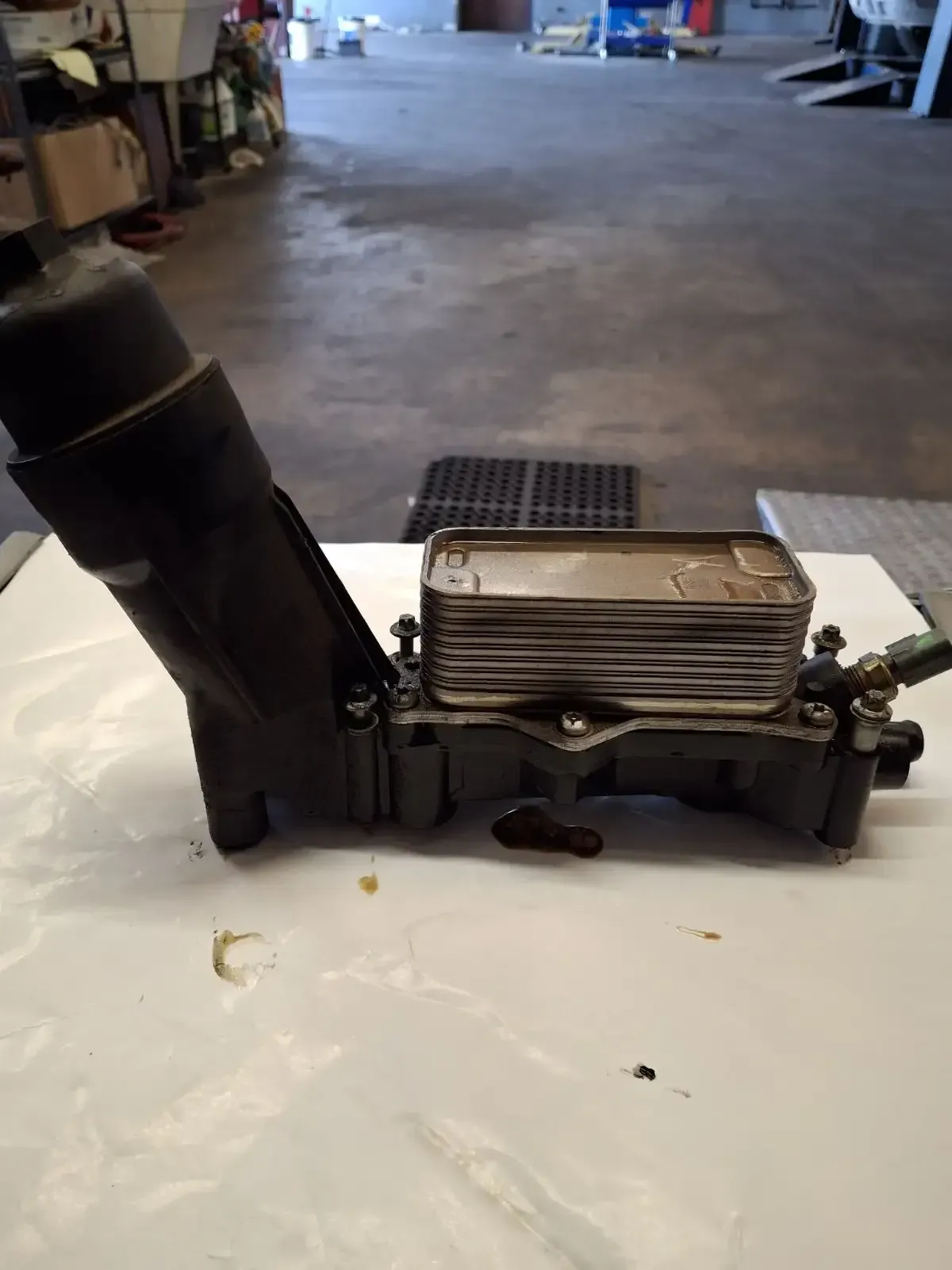
Hello to all my Complete Car Care Friends & soon to be Friends. Here we have a Jeep for which my customer was complaining of a transmission fluid leak. The engine is a 3.6L V6...
October 1, 2024
Hello All. Thank you for considering Complete Car Care for your automotive diagnostic needs. Since 2019, the first Saturday of each month, a group of local NAPA AutoCare Service...
By Complete Car Care • September 26, 2024
Fresno Unified School Dist. is the 3rd largest school district in California. When you add all the other School Districts, this event at Chukchansi Park is one of the largest high...
By Complete Car Care • December 9, 2016
The Injection Section
By Complete Car Care • November 9, 2016
Don’t Fail Your Water Pump
By Complete Car Care • October 9, 2016
Don’t Anti-Seize the Day
By Complete Car Care • September 9, 2016
Electric Everything
By Complete Car Care • August 9, 2016
The HC Detective
By Complete Car Care • July 9, 2016
How to Keep Cool
Show More